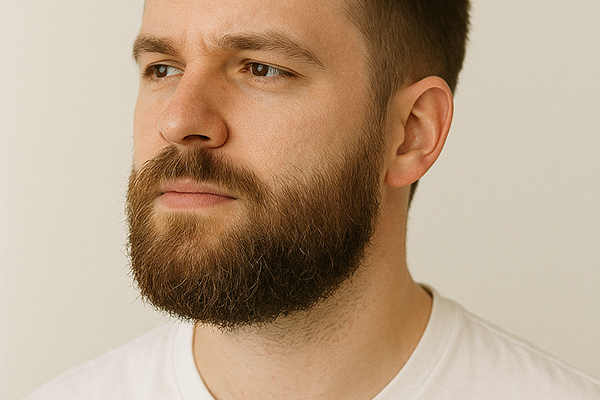
You typed "how to grow a beard faster" into Google at 1am while stroking three weeks of patchy stubble. We've all been there. Good news: a few things actually work. Bad news: most of what the internet sells you does not. Here's the honest breakdown, from neck to nuts... well, mostly neck this time.
Mostly, no. Beard growth speed is set by genetics and hormones, and hair grows about half an inch per month no matter how much you yell at it. What you CAN do is maximize the growth you're capable of, wake up dormant follicles, and stop sabotaging yourself. That's what this guide covers.
Does minoxidil work for beard growth?
Yes, minoxidil (the stuff in Rogaine) is the only over-the-counter product with real evidence behind it for stimulating new facial hair. A 2016 clinical study found 3% minoxidil produced significantly more beard growth than placebo. It works by increasing blood flow and pushing follicles into their growth phase.
The catch: it's off-label for faces, results take 3 to 6 months, and gains may fade if you stop before the hairs go terminal. Some guys get dry skin or irritation. Talk to a doctor if you have heart conditions. This is the one that works, but it's a commitment, not a magic spray. The full breakdown lives in our honest minoxidil guide.
Do derma rollers actually help?
Maybe. Microneedling has decent evidence for scalp hair, especially combined with minoxidil, and the theory transfers: tiny needles trigger repair, collagen, and blood flow around follicles. Beard-specific studies are thin. If you try it, use a 0.5mm roller once a week on clean skin, and never share it or use it on active acne.
Do beard growth supplements work?
If you eat like a functioning adult, biotin gummies mostly produce expensive pee. Biotin only helps if you're deficient, which is rare. What your beard actually needs is protein, zinc, iron, vitamin D, and enough calories. A deficiency will absolutely stall growth, but the fix is food first, pills second.
Does testosterone affect beard growth?
Yes, but not how the supplement bros tell you. Beard density depends on DHT, a testosterone byproduct, and how sensitive your follicles are to it, which is genetic. Unless you're clinically low (get bloodwork, see a doctor), boosting testosterone naturally has a bigger effect on your energy and mood than your chin.
The lifestyle stuff still matters though: lifting weights, sleeping 7 to 9 hours, managing stress, and not living on beige food all keep your hormones in the normal range where your beard can do its best work.
What about beard oil? Does it speed up growth?
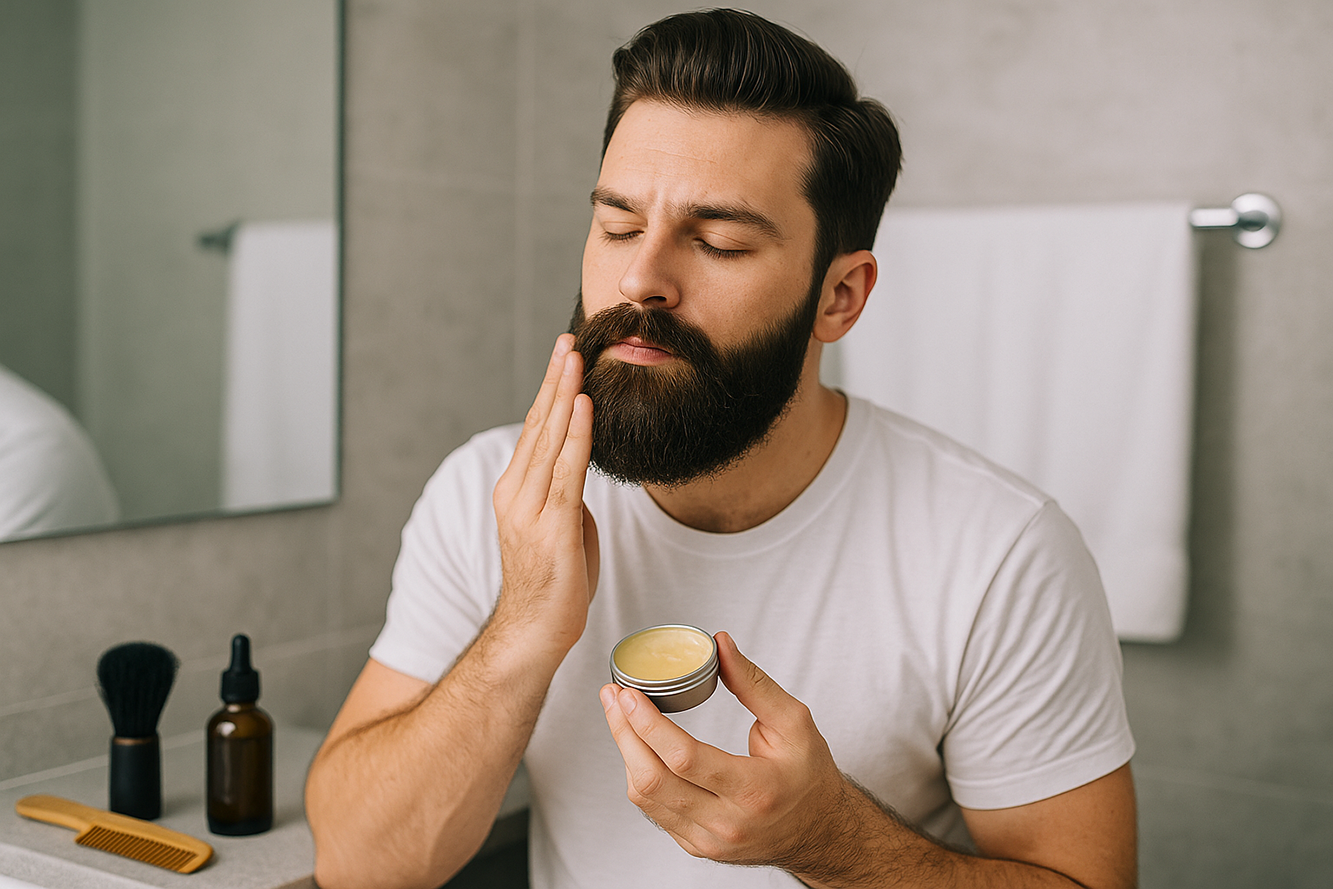
No. Beard oil does not make hair grow faster, and any brand claiming otherwise is lying to you. What it does is stop the itch, soften the wire brush on your face, and keep the skin underneath from flaking. That matters, because the number one reason beards fail is guys shaving during the itchy phase. Oil keeps you in the game.
Product pickLight, all-natural beard oil. It does exactly what it says and nothing it doesn't. No growth claims, just a face that stops itching.
The myths, rapid fire
Shaving makes it grow back thicker: No. Cut hair has a blunt tip that feels stubbly. The follicle has no idea you shaved.
Beard rollers with 540 titanium needles transform you in 30 days: The before/after photos are lighting and angles.
If it's patchy at week 3, give up: Absolutely not. Most patches fill in by month 3. See the full timeline.
The honest playbook
Grow for 90 days minimum before judging anything. Eat protein, sleep hard, lift something heavy. Consider minoxidil if you want new growth and can commit 6 months. Keep the skin healthy with oil so you don't quit during the itch. And keep the neckline clean so you look intentional, not unemployed.
Product pickPrecision trimmer. A trimmer with a proper guard system saves your neckline and your dignity.
Your beard is coming. It's just on genetics' schedule, not yours.