Twenty-five was patchy and impatient. Forty is a different problem: the beard mostly grows, but it does not look or feel like it used to, and nobody explains why. From neck to nuts, here is what changes in your 40s and beyond, and what is actually worth doing about it.
New to the growth curve generally? Start with the growth timeline before layering age on top of it.
Does beard growth actually slow down after 40?
A little, not dramatically. Each hair follicle cycles through growth and rest phases, and that cycle gets slightly shorter with age, so strands reach a shorter maximum length before shedding and restarting. Most guys in their 40s can still grow a full beard. It just takes a bit longer to get there than it did at 25, and that is follicle biology, not a sign anything is wrong.
Why does a beard go gray before the rest of your hair?
Pigment cells in facial follicles tend to burn out earlier than scalp follicles, often starting in the mid-30s for genetically predisposed men. Gray hair is also structurally different: coarser and drier, because the pigment that once helped coat the shaft is gone. A graying beard is not thinning, it just reads as different because the texture and shine changed, not the density.
Why do new patchy spots show up now when they weren't there before?
Androgenetic sensitivity can shift unevenly over decades, same mechanism as male pattern baldness but playing out on the face at a slower rate. A patch that filled in fine at 25 can thin at 45 because the follicles there became more DHT-sensitive over time, not because you did anything differently. This is a separate issue from the normal early patchiness covered in how to fix a patchy beard, which is about immature follicles, not aging ones.
Does lower testosterone after 40 shrink your beard?
Rarely on its own. Total testosterone drifts down gradually with age for most men, but facial hair responds to DHT sensitivity at the follicle more than circulating testosterone levels, the same story as at any age. Genuinely low testosterone (clinically low, not just "lower than 25") can affect beard density in some men, but if your beard looks different mainly in texture and gray coverage, that is aging, not a hormone problem. More on the testosterone myth in general in is beard growth genetic.
Does minoxidil still work on a beard in your 40s and beyond?
Yes, the mechanism does not have an age cutoff. Minoxidil can still wake up underperforming follicles at 45 the same way it can at 25, and age-related thinning from shifting DHT sensitivity is actually a reasonable case for trying it. It will not reverse gray hair or undo genuinely finished follicles. Full rundown of who it helps in our minoxidil beard guide.
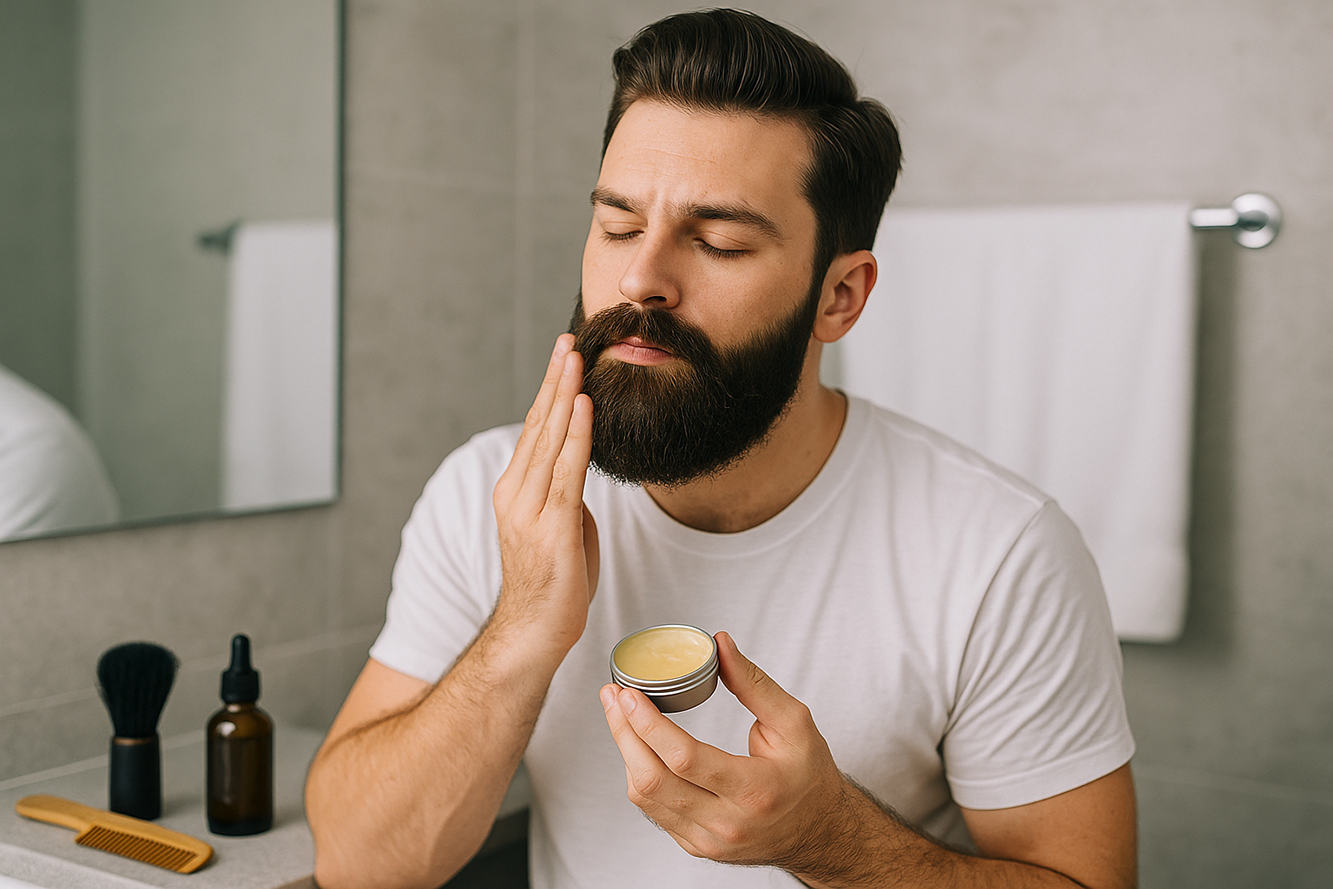
Product pickLight, all-natural beard oil. Gray, coarser hair is drier by default, so the oil step matters more at 40 than it did at 25, not less. Daily use keeps new texture from reading as "unkempt" instead of just "older."
What should actually change in your routine after 40?
Three things: more consistent oiling since coarser gray hair dries out faster, slightly more frequent trims since drier hair splits and looks ragged sooner, and less tolerance for one-size-fits-all products since skin also gets drier with age. None of this is dramatic. For a full comparison of what is actually worth buying at any age, see what beard growth products actually do.
Product pickBoar bristle brush. Distributing your skin's natural oil matters more once that oil production slows down with age, and a brush does that job better than your fingers.
Is thinning facial hair after 40 ever worth a doctor visit?
Sometimes, yes. Gradual, even changes in texture and some new patchiness are normal aging. Sudden patchy loss, especially in clean circular spots, or thinning that comes with fatigue, weight change, or scalp hair loss at the same time, is worth a real conversation with a doctor, since thyroid issues and alopecia areata can show up this way. Normal aging is slow and even. Anything fast or uneven is a different conversation.
The honest playbook
Growth slows slightly, gray shows up early because pigment cells quit before density does, and DHT sensitivity can shift patches that were never a problem before. Testosterone is rarely the real story. Minoxidil still works the same way it always did. The routine fix is boring: oil more consistently, trim a little more often, stop using products built for 25-year-old skin and hair.
Nothing here means your beard is failing. It means it is forty, same as you, and it wants slightly different maintenance to look as sharp as it did a decade ago.