You finally grow a respectable beard, put on a black shirt, and discover your face has been quietly producing snow. Beard dandruff, or beardruff if you want the cute name for an uncute problem, hits a huge share of guys somewhere in the first three months. The good news: it is one of the most fixable problems in all of beard care. From neck to nuts, here is the whole fix.
If your beard is under 90 days old, flakes are practically a rite of passage. See where you are on the beard growth timeline before you panic-buy anything.
What causes beard dandruff?
Two culprits: dry skin and a yeast called Malassezia that lives on everyone's face and feeds on skin oil. A new beard wicks moisture away from skin while trapping oil and dead cells underneath. Dry skin flakes fine and white; yeast-driven flakes come bigger, oilier, and itchier, often with red skin underneath.
How do you get rid of beard dandruff?
A four-step routine fixes most cases inside two weeks: wash the beard 2 to 3 times a week with a real beard wash, exfoliate the skin underneath with a beard brush before showering, oil the skin daily while the beard is damp, and stop blasting your face with hot water. That is the entire protocol.
Step by step:
Wash, but not daily. Regular shampoo strips every drop of oil off your face and makes flakes worse. A beard-specific wash 2 to 3 times a week clears the dead skin and excess oil without nuking the foundation. Our beard washing guide has the full schedule.
Brush before you shower. A boar bristle brush lifts flakes and dead skin out of the undergrowth so the wash can actually rinse them away. Thirty seconds, downward strokes, done.
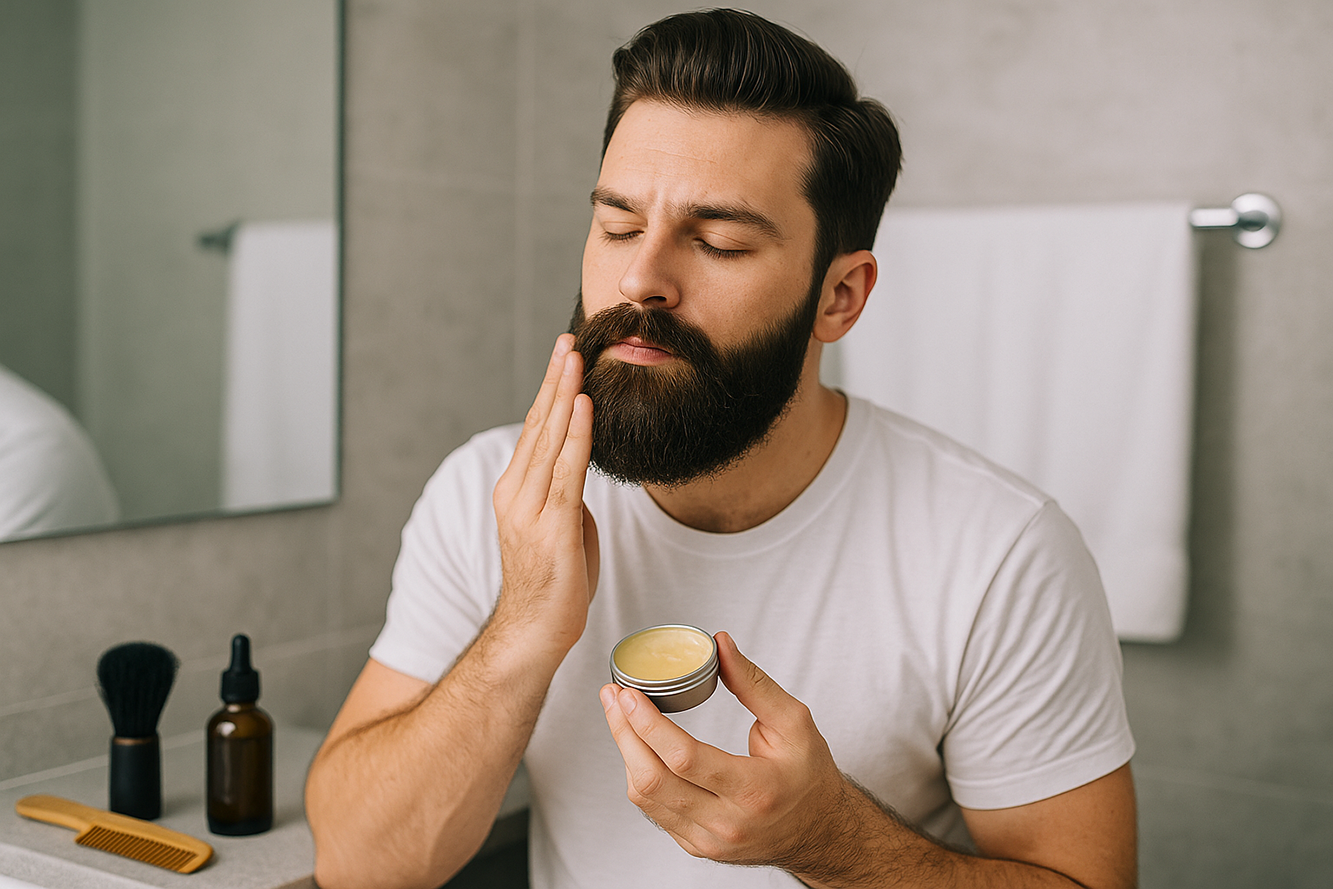
Oil the skin, not just the hair. After showering, towel to damp, then work 3 to 5 drops of oil down to the skin with your fingertips. This is moisturizer for the ground floor, where the flakes are born.
Cool it on the hot water. Scalding showers strip skin oil and kick off the dry-flake cycle all over again. Warm, not lava.
Same mechanisms, different terrain. The yeast behind scalp dandruff is the same one that sets up shop under a beard, which is why anti-dandruff shampoo can help stubborn cases. But beard skin is thinner and more sensitive than scalp, so daily harsh shampoo that works up top can wreck things down here.
Does anti-dandruff shampoo work on beards?
For stubborn, oily, itchy flakes with red skin, yes, as a short-term tool. Use a pyrithione zinc or ketoconazole shampoo on the beard twice a week for two to three weeks, then taper off and let the wash-brush-oil routine hold the line. If redness and thick scale persist, that may be seborrheic dermatitis. See a dermatologist, not a supplement aisle.
How long does it take to fix beardruff?
About two weeks of consistency for the standard dry-skin variety. You should see fewer flakes within four or five days and a clean black-shirt test by week two. If nothing improves after three weeks of the full routine, upgrade to the anti-dandruff shampoo step or get a professional opinion.
Can you prevent beard dandruff from coming back?
Yes, and prevention is just the fix on maintenance mode: keep washing 2 to 3 times weekly, keep oiling daily, keep the brush in rotation, and rewash after heavy sweat sessions. Winter air and indoor heating are relapse season, so bump the oil up a drop or two when the temperature drops.
A trimmed, maintained beard also flakes less, because shorter, tidier growth traps less debris and lets skin breathe. Your neckline deserves attention anyway.
Product pickPrecision trimmer. Flake-free means nothing if the beard still ends somewhere around your collarbone. Keep the edges honest.
The honest playbook
Brush 30 seconds before showering. Wash with beard wash 2 to 3 times a week, never daily, never with regular shampoo. Oil into the skin every day while damp. Warm showers, not hot. Stubborn oily flakes get two weeks of anti-dandruff shampoo. Persistent redness gets a dermatologist. Total cost of the routine: about the price of one decent lunch a month.
Beardruff is not a sign your beard is failing. It is a sign your skin is thirsty and buried under new construction. Water the ground floor and the snow stops.